
Lithium Battery Specs Explained: How to Read an XS Power Lithium Spec Sheet
If you've spent years reading AGM spec sheets, the first lithium spec sheet you pick up will look like it's missing something.
Reserve capacity is gone. The amp hour number is suspiciously small. There are two cranking amp ratings instead of one, and two amp hour ratings instead of one, and half of them have "Pb Eq" stapled to the end. Meanwhile the wattage support number is enormous relative to a battery that weighs less than the toolbox sitting next to it.
None of that is marketing sleight of hand. It's what happens when you rate a fundamentally different chemistry using an honest set of numbers. Lithium cells store and release energy so differently from lead-acid that some traditional specs stop being meaningful, and new ones have to take their place.
Here's what every line on an XS Power lithium spec sheet means, and how to use it.
First, what "lithium" actually means here
Lithium isn't one chemistry — it's a family, and XS Power builds from two members of it.
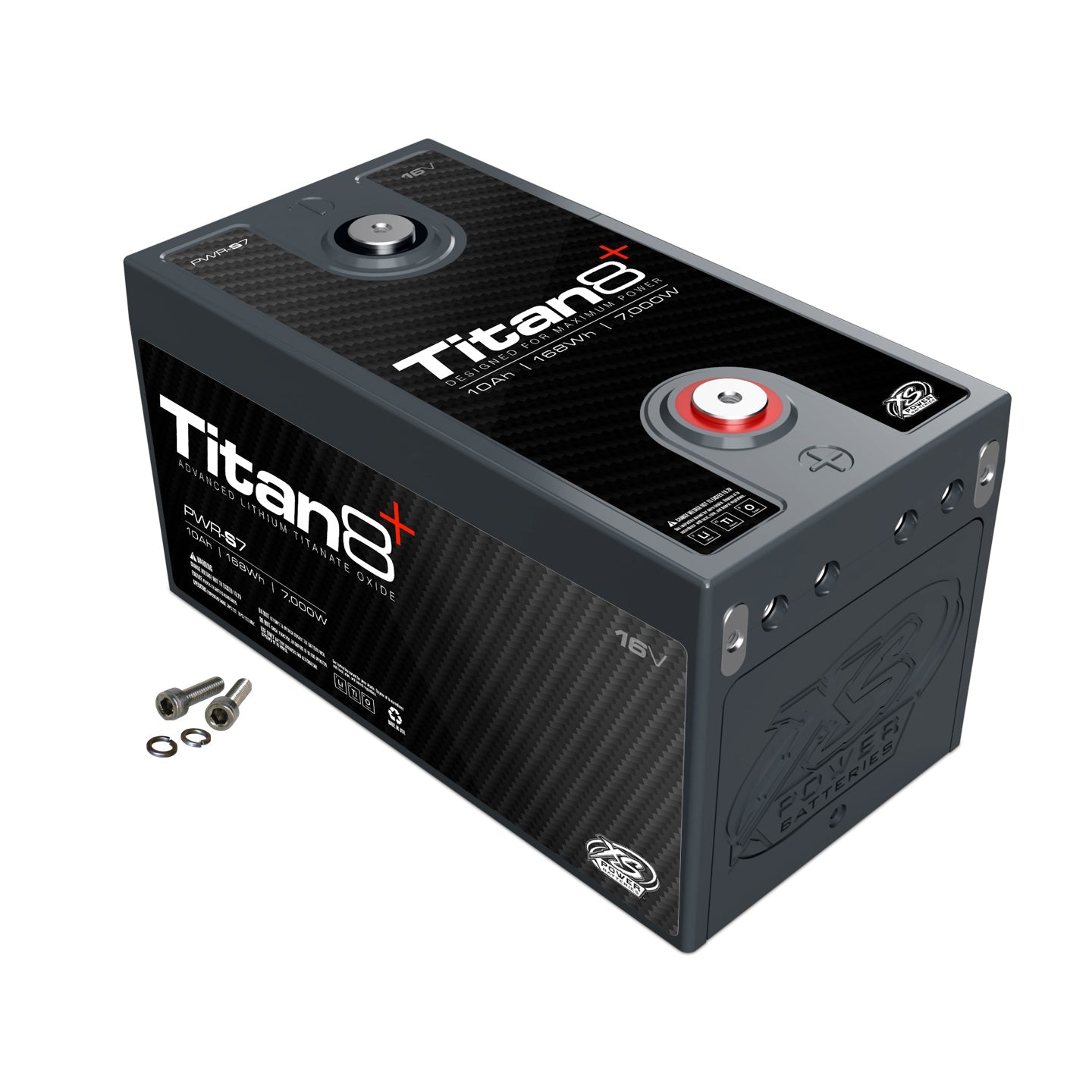
LTO (Lithium Titanate Oxide)
powers the Titan8 and XV-Series. LTO cells are built for extreme burst output and extremely fast recharge, accepting charge current at many multiples of their own capacity. They also tolerate cold and cycle count far better than most lithium chemistries. This is the chemistry behind the high-output competition and racing products.
LFP (Lithium Iron Phosphate)
powers our Li-Series products and xMAX-Series products. LFP delivers the highest energy density for the chemistries XS Power offers, so that paired with the weight savings makes it a great option for high performance audio or racing applications.
Both share the traits that reshape the spec sheet: very low internal resistance, a flat discharge curve that holds voltage under load instead of sagging, and a usable depth of discharge that lead-acid can't approach. Every spec below is downstream of those three facts.
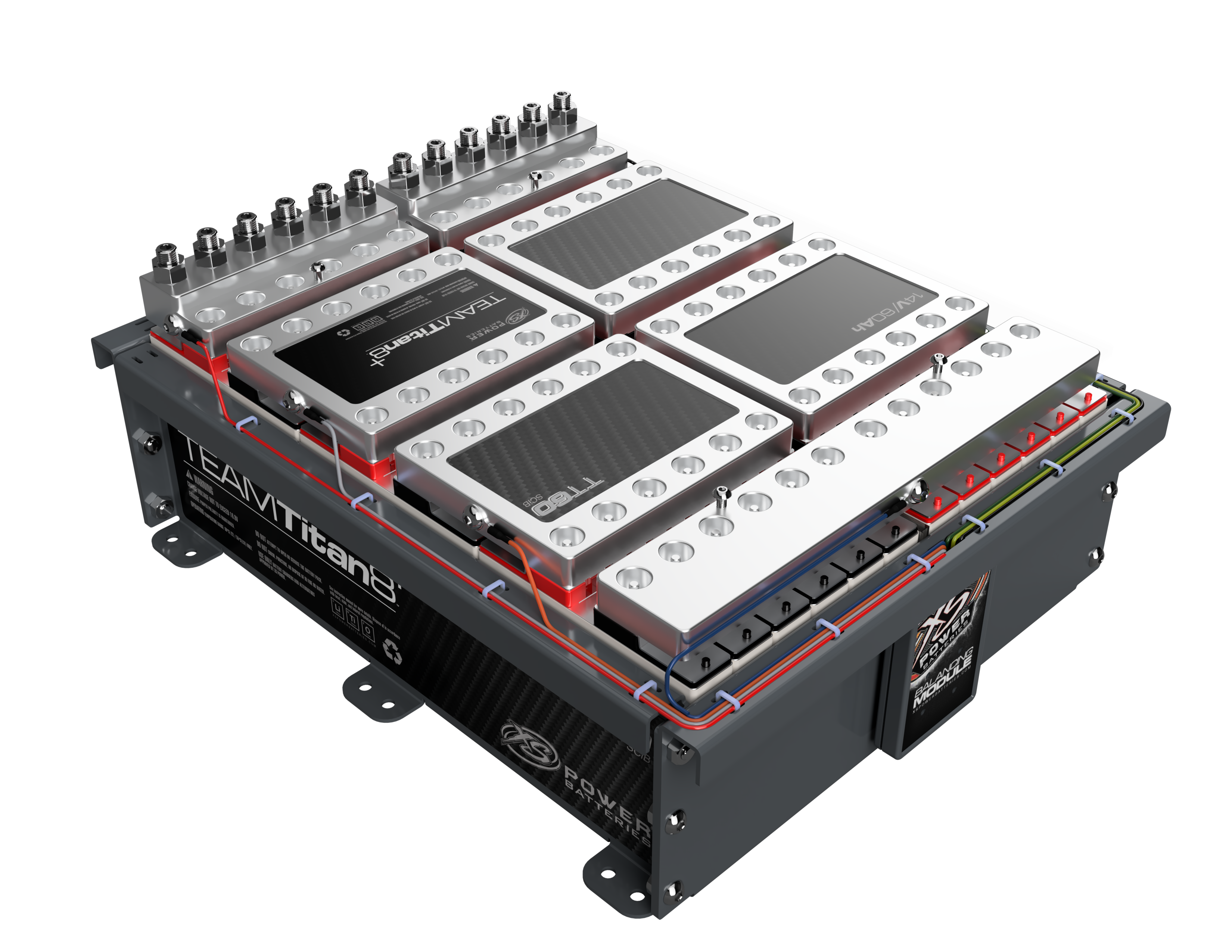
One thing lithium requires: Cell balancing. Maintaining equal current among the cells in series directly correlates to the performance and lifespan you'll get out of your battery.
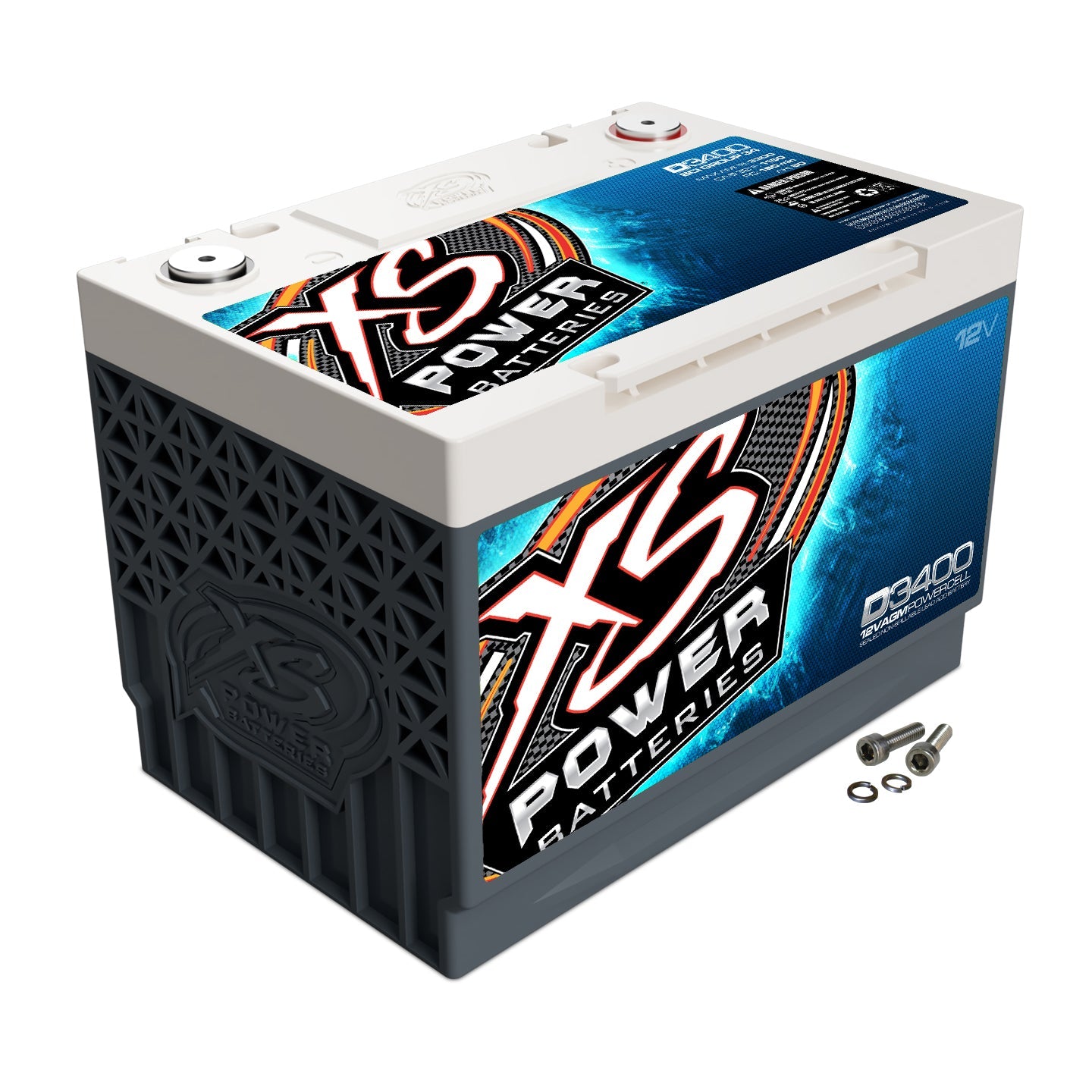
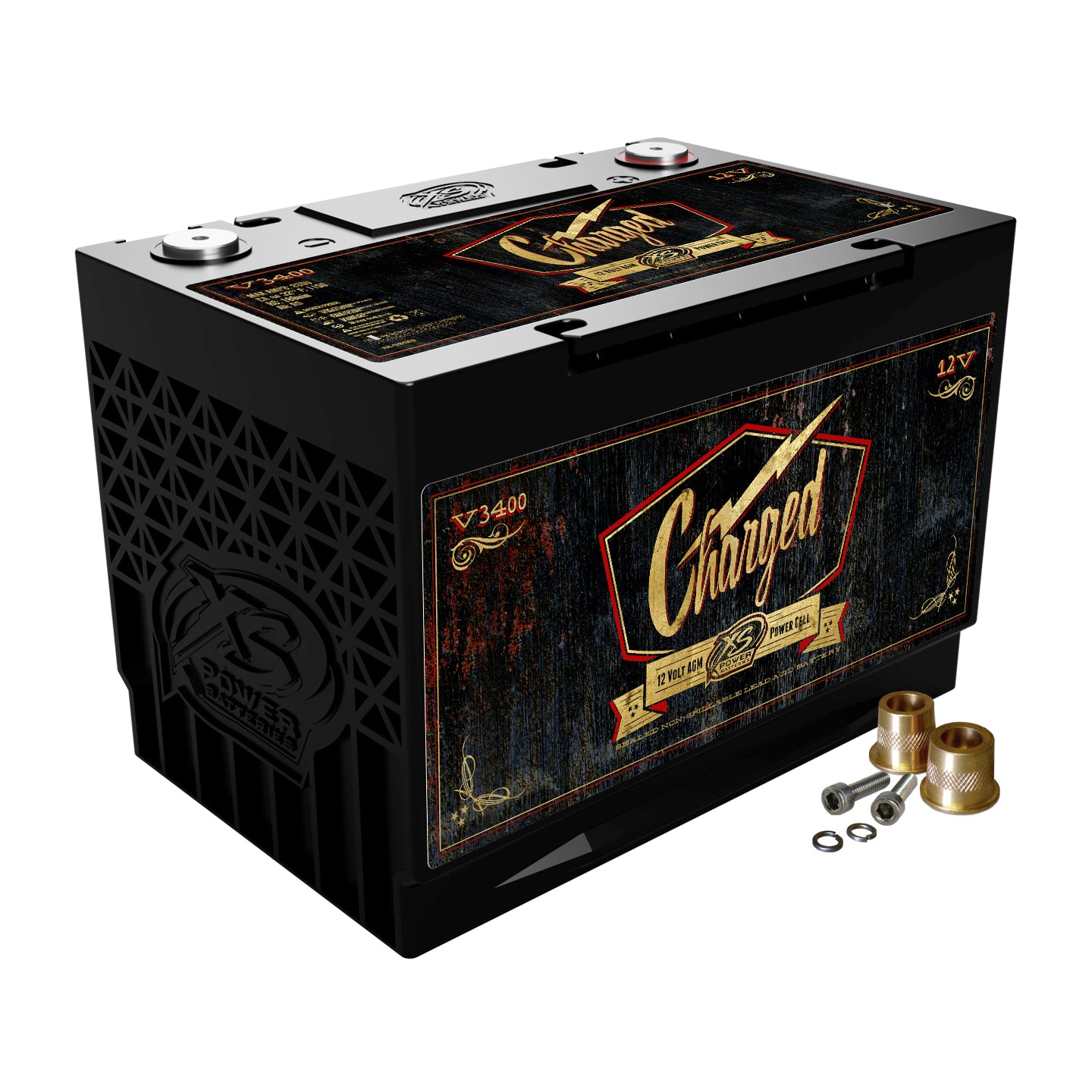
BCI Group Size
What it is: A standardized case designation from Battery Council International, the North American body that defines automotive battery form factors.
What it tells you: Physical fit — the maximum case dimensions, the terminal type, and where the terminals sit. Nothing more. A group size is a shape, not a performance rating.
What's different about lithium: The group size tells you the battery will drop into that tray, but it no longer tells you anything about the weight or capability of what you're installing. A lithium battery in a given group can weigh a fraction of the AGM it replaces while supporting far more system wattage. Group size used to be a rough proxy for "how much battery" — with lithium, that shortcut is dead.
Practical note: Because lithium batteries are so much lighter, the factory hold-down matters more, not less. A pack that weighs a tenth of what the tray was designed to hold can move around if it isn't properly secured. Some lithium products use a spacer or bracket to fill a group-size case footprint. Secure it properly regardless.
Volts
What it is: The nominal system voltage the battery is designed to serve.
What it tells you: Which electrical system this battery belongs in — a 12V vehicle system, a 14V or 16V high-output setup.
What's different about lithium — and this trips people up: On a lithium spec sheet, the voltage figure describes system compatibility, not the literal resting voltage of the pack. Different lithium chemistries hit different cell counts and different nominal voltages, so a battery listed as serving a 12V system may rest meaningfully above 12.0 volts by design. That is not a defect and not a mislabel — it's the chemistry.
Why you care: Two reasons. First, the higher, flatter operating voltage is a genuine performance advantage: amplifiers make more power at higher supply voltage, and lithium holds that voltage under load instead of sagging the way lead-acid does. Second, voltage compatibility with your charging system is not optional. Check the listed voltage against your alternator and your amplifiers before you buy, and check the product's charging requirements before you connect anything.
Max Amps
What it is: The maximum instantaneous current the battery can deliver — a burst measurement, not a sustained one.
What it tells you: The battery's potential instantaneous current output under extremely low-resistance conditions. It is not a recommended operating current and should not be used to size or select a battery for a vehicle.
Why you care: A very high instantaneous-current capability generally tells you the battery has low internal resistance and can supply a large amount of current for a very short period with relatively little voltage sag. That can correlate with strong transient performance—things like starter inrush, large audio-system peaks, or other brief high-current events. But it does not tell you how much current the battery can safely sustain, how long it can support a load, or whether it is the correct battery for a particular vehicle.
Where the number becomes especially important is in electrical-system protection. If a battery is capable of several thousand amps into a fault, engineers and installers need to know that when specifying things like fuses, circuit breakers, disconnects, contactors, busbars, cable protection, and other components. Those devices need adequate interrupting capability to safely clear a fault produced by the battery.
What's different about lithium: The ratio of burst current to physical size is dramatically better. Lithium cells — LTO especially — are built to deliver bursts at many times their own capacity rating, which is how a pack that weighs single-digit pounds delivers burst current in the thousands of amps. This is the spec where the weight-to-performance gap between lithium and lead-acid is most obvious.
CA (Cranking Amps)
What it is: The actual, measured cranking output of the battery — amps delivered under a standardized sustained cranking load.
What it tells you: Real starting power, measured directly, in the battery's own terms.
Why you care: It's the honest, unconverted number. If you want to know what this specific pack does when you turn the key, this is it.
Note what's missing: You won't see a separate CCA figure the way you do on an AGM sheet. Lithium's cold-temperature behavior is governed by chemistry rather than by the plate-and-electrolyte dynamics the CCA test was designed around, so a single cranking figure plus chemistry-specific temperature guidance is the more meaningful way to rate it. Check each product's operating temperature range — this is an area where LTO and LFP behave quite differently from each other.
CA Pb Eq (Cranking Amps, Lead-Acid Equivalent)
What it is: The cranking output of this lithium battery expressed as the equivalent AGM cranking amp rating. "Pb" is the chemical symbol for lead, so "Pb Eq" reads as lead-acid equivalent.
What it tells you: How large an AGM battery you'd need to buy to get the same real-world cranking performance.
Why the two numbers differ: Lithium holds its voltage far more steadily under a heavy load than lead-acid does. A lead-acid battery's voltage drops significantly the moment you demand serious current, which is why cranking tests are defined around a minimum voltage the battery must stay above. Lithium's flat discharge curve means it stays well above that threshold while delivering the same current — so it does more useful work per rated amp. The Pb Eq figure translates that advantage into the units you already shop in.
Why you care: This is the apples-to-apples number. If your vehicle calls for a certain CCA rating, or you're trying to figure out whether a lithium pack will out-crank the AGM currently in your truck, compare against CA Pb Eq — not the raw CA figure. Comparing a lithium battery's unconverted CA against an AGM's CA is comparing two different things and will make lithium look worse than it performs.
Ah (Amp Hours)
What it is: The battery's actual rated storage capacity — how much current it can deliver over time.
What it tells you: The literal size of the tank, in the pack's own terms.
Why the number looks small: Because on a lithium spec sheet, it's the honest number, and lithium doesn't need as many rated amp hours to do the same job. Hold that thought for the next spec.
Why you care: Amp hours matter most when the engine is off — playing music at a show, running a burp, powering accessories at a tailgate. That's all coming out of stored capacity. But taken alone, the raw Ah figure will badly mislead you if you're comparing it against an AGM.
Ah Pb Eq (Amp Hours, Lead-Acid Equivalent)
What it is: The battery's capacity expressed as the equivalent AGM amp hour rating.
What it tells you: How many amp hours of lead-acid you'd have to buy to get the same usable energy.
Why the two numbers differ — this is the most important concept on the sheet: Rated capacity and usable capacity are not the same thing. A lead-acid battery's rated amp hours assume you drain it completely, but you can't actually do that without destroying it. Discharge a lead-acid battery deeply and repeatedly and you'll dramatically shorten its life, which is why the conventional guidance is to use only a portion of the rating.
Why you care: When you're cross-shopping against AGM, Ah Pb Eq is the comparison figure. Raw Ah against raw Ah is not a fair fight and understates what lithium actually delivers. Note also that the conversion ratio isn't a single fixed multiplier across the catalog — it varies by chemistry and by how a given product is built, which is exactly why XS Power prints the converted figure per product rather than leaving you to guess at it.
Energy Wh (Watt Hours)
What it is: Total stored energy in watt hours — capacity and voltage combined into one figure. Conceptually, amp hours multiplied by voltage.
What it tells you: The most complete single measure of how much energy is in the pack, and the only capacity spec that's directly comparable across different voltages and chemistries.
Why it exists on lithium sheets: Amp hours alone are ambiguous once voltage varies. Two batteries with identical Ah ratings but different nominal voltages hold different amounts of energy — the higher-voltage pack holds more. Watt hours resolve that by folding voltage into the number.
Why you care: If you're comparing a 12V pack against a 14V or 16V pack, or comparing across chemistries, watt hours is the fair comparison. It's also the spec that governs runtime math: system draw in watts divided into available watt hours gets you to runtime directly, without a voltage conversion step in the middle.
Where RC went: Reserve capacity — the minutes-based endurance rating on AGM sheets — doesn't appear here. RC was designed around lead-acid's sagging discharge curve and a specific cutoff voltage. Watt hours does the same job with less ambiguity and better cross-chemistry comparability, so lithium sheets carry Wh instead.
Wattage Support
What it is: XS Power's rating for how much total amplifier power the battery is built to support.
What it tells you: The bottom-line answer to "how big a system can this back up." It's the practical synthesis of everything above — burst current, usable capacity, and voltage stability under load, translated into the unit you actually shop amplifiers in.
What's different from AGM: AGM spec sheets split this into Primary Watts and Secondary Watts, because a lead-acid battery's capability changes substantially depending on whether it's also responsible for starting the engine and carrying the vehicle's baseline electrical load. Lithium sheets typically carry a single wattage support figure. Check each product's listing for its intended role — some are designed as main batteries, some strictly as add-on power cells, and some are rated for either.
The caveat that matters most: A battery does not make power. It stores and buffers it — the alternator generates it. Wattage support tells you what the battery can hold up under, not what your vehicle can sustain. If you're building toward a large number here, the charging system and the wiring have to scale with it. Some lithium products additionally specify a maximum alternator output they can be paired with, because their charge acceptance is high enough that an oversized alternator can push more current into them than intended. Read the product page. This is not a spec to eyeball.
Polarity
What it is: Which side the positive (+) terminal sits on when you face the battery with the terminals toward you. L means positive on the left; R means positive on the right.
What it tells you: Whether your existing cables reach the correct posts. That's the whole spec — and it's still one of the most common ordering mistakes people make.
Why you care: Battery cables are cut to length. A reversed-polarity battery can drop perfectly into the tray and still leave the positive post several inches from where your positive cable ends. Best case, you're buying and running new cable. Worst case, someone forces a connection and reverses polarity on the vehicle, which can destroy an alternator, an ECU, or an amplifier in seconds.
How to check: Before you order, look at the battery you're removing in its normal installed orientation and note which side the positive cable lands on. On our lineup, reverse-polarity versions of a given model carry an R in the part number.
Reading the sheet as a whole
The specs sort into four jobs:
Fitment
check these first. BCI Group Size, Volts, and Polarity. These are pass/fail. Either the battery fits your vehicle and your electrical system or it doesn't, and no amount of performance on the rest of the sheet fixes a battery that won't bolt in or won't reach the cables.
Burst capability
how hard it hits. Max Amps, CA, and CA Pb Eq. Short, heavy current delivery: cranking the engine, or catching a bass transient without letting voltage sag.
Stored energy
how long it lasts. Ah, Ah Pb Eq, and Energy Wh. Sustained delivery over time, and what matters most with the engine off.
Wattage Support
the shortcut. XS Power's translation of all of the above into the language you're shopping in.
And one rule that governs the whole sheet: when you're comparing lithium against lead-acid, use the Pb Eq columns. The raw CA and Ah figures are the pack's honest numbers in its own terms, but they systematically understate real-world performance against AGM because they don't account for lithium's flat voltage curve or its far greater usable depth of discharge. XS Power prints both so you can see the actual measurement and the fair comparison side by side. Use the right one for the question you're asking.
Which chemistry is right for your build?
Lithium isn't automatically the answer. AGM remains the right call for plenty of builds — it's more forgiving of imperfect charging systems, costs less up front, and handles a wider range of installation conditions without special consideration. Lithium wins decisively on weight, on burst capability per pound, on usable capacity, on recharge speed, and on cycle life — and it demands more attention to charging system compatibility in return.
New to AGM specs, or cross-shopping the two? Start with our companion guide, AGM Battery Specs Explained, then compare the Pb Eq figures here against the AGM ratings there.
Ready to spec your build?
Browse the full lithium lineup by wattage support and group size, or use our Battery Finder to match by vehicle. Every XS Power battery is tested in our own lab before a label goes on it — when we print a number, you can build around it.