

AGM Battery Specs Explained: How to Read an XS Power Spec Sheet

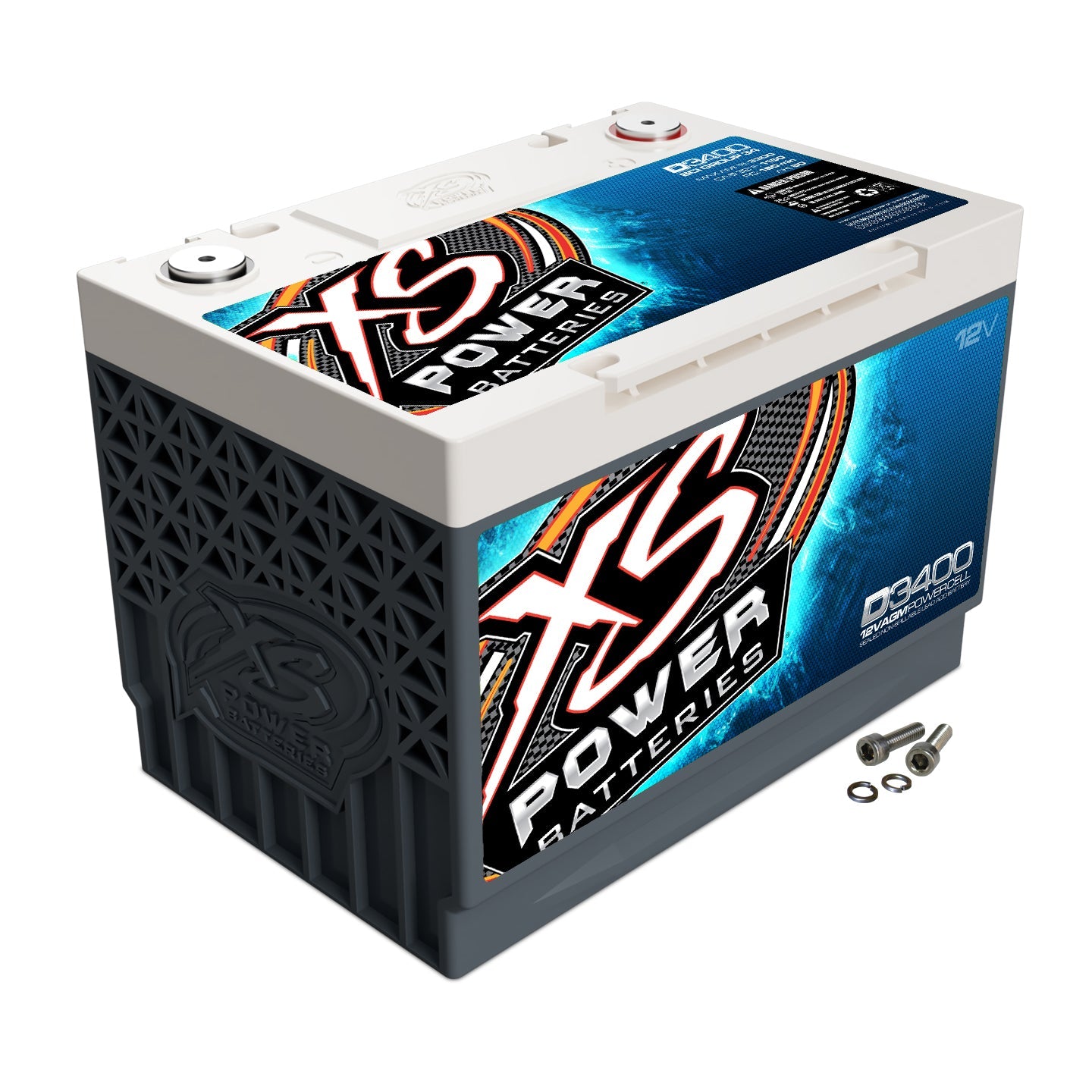
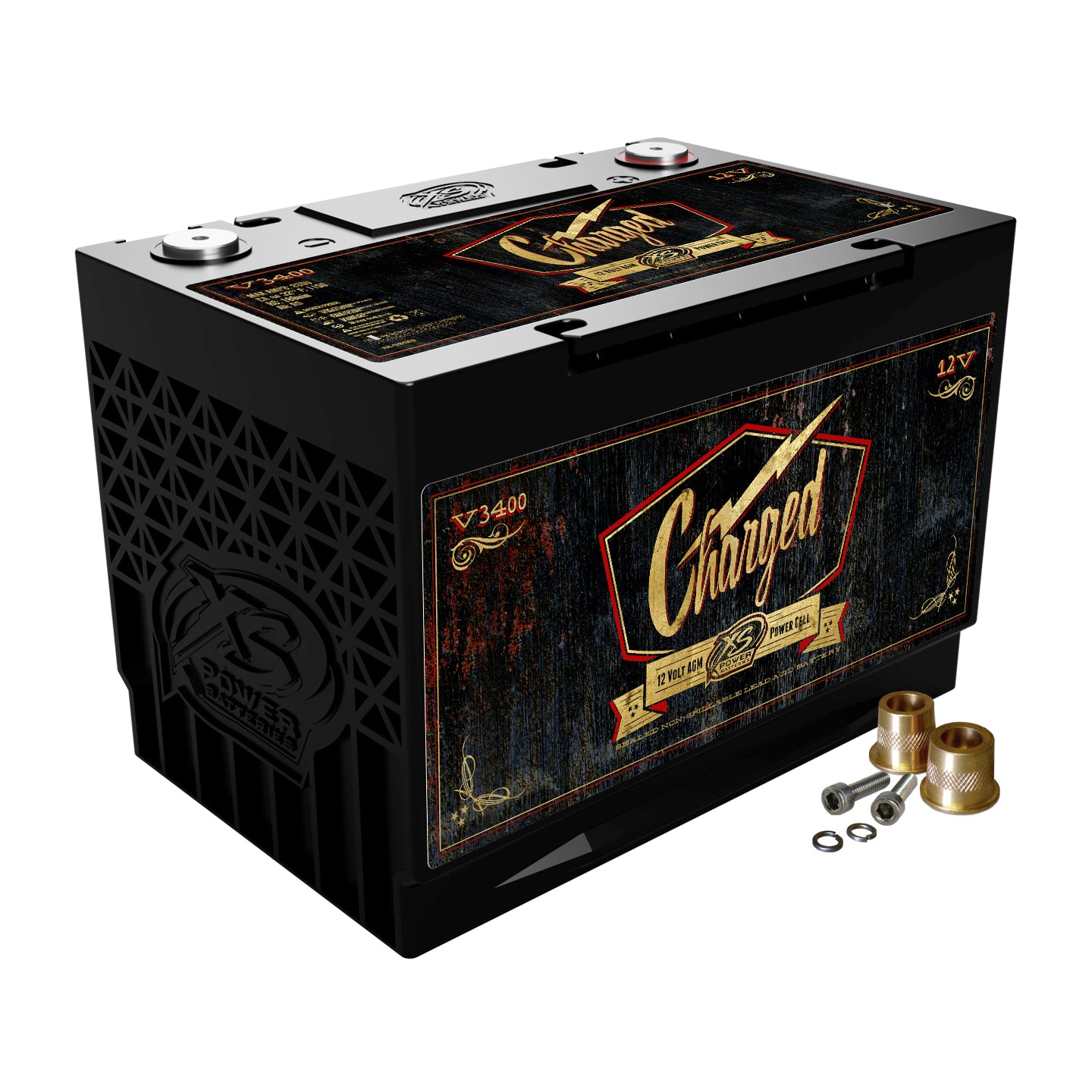
Every XS Power AGM battery ships with a spec sheet that reads like a wiring diagram — BCI Group Size, Max Amps, CA, CCA, Ah, RC, Primary Watts, Secondary Watts, Polarity. Most people scan for the biggest number and call it a day.

That's how you end up with a battery that won't fit the tray, won't reach the cables, or won't hold voltage on the first bass note.

Each of those specs answers a different question. Some tell you whether the battery physically fits your vehicle. Some tell you how hard it can hit. Some tell you how long it can hold on. Here's what every line on the sheet actually means — and why it matters for your build.

First, a quick word on AGM

AGM stands for Absorbed Glass Mat. Instead of plates sitting in a reservoir of free liquid acid the way they do in a conventional flooded battery, the electrolyte is absorbed into fiberglass mats packed tightly between the plates.

That construction is the reason the rest of the spec sheet looks the way it does. Tight plate compression and very low internal resistance let an AGM dump current faster and recharge quicker than a flooded battery of the same size. The sealed, non-spillable design means it can mount in a trunk, under a seat, or on its side without venting acid. And the compressed internal structure shrugs off the vibration that kills conventional batteries in a car with real subwoofers in it.

Now, the specs.

BCI Group Size

What it is: A standardized case designation from Battery Council International — the North American body that defines automotive battery form factors.

What it tells you: Physical fit, and nothing else. A group size code specifies the maximum length, width, and height of the case, the terminal type (top post, side post, threaded stud), and where those terminals sit. Two batteries carrying the same group size from two different manufacturers will drop into the same tray, clear the same hold-down, and meet the same cables — even if their capacity and output are completely different.

What it does not tell you: Anything about power, capacity, or quality. Group size is a shape, not a performance rating.

Why you care: This is the first spec you should check, not the last. If the case doesn't fit the tray or the hold-down won't clamp it, the rest of the sheet is irrelevant. Match the group size on the battery you're removing, or measure your tray and available height clearance before you buy.

Volts

What it is: The battery's nominal voltage — the design voltage of the system it's built to serve, not the voltage you'll actually measure at the posts.

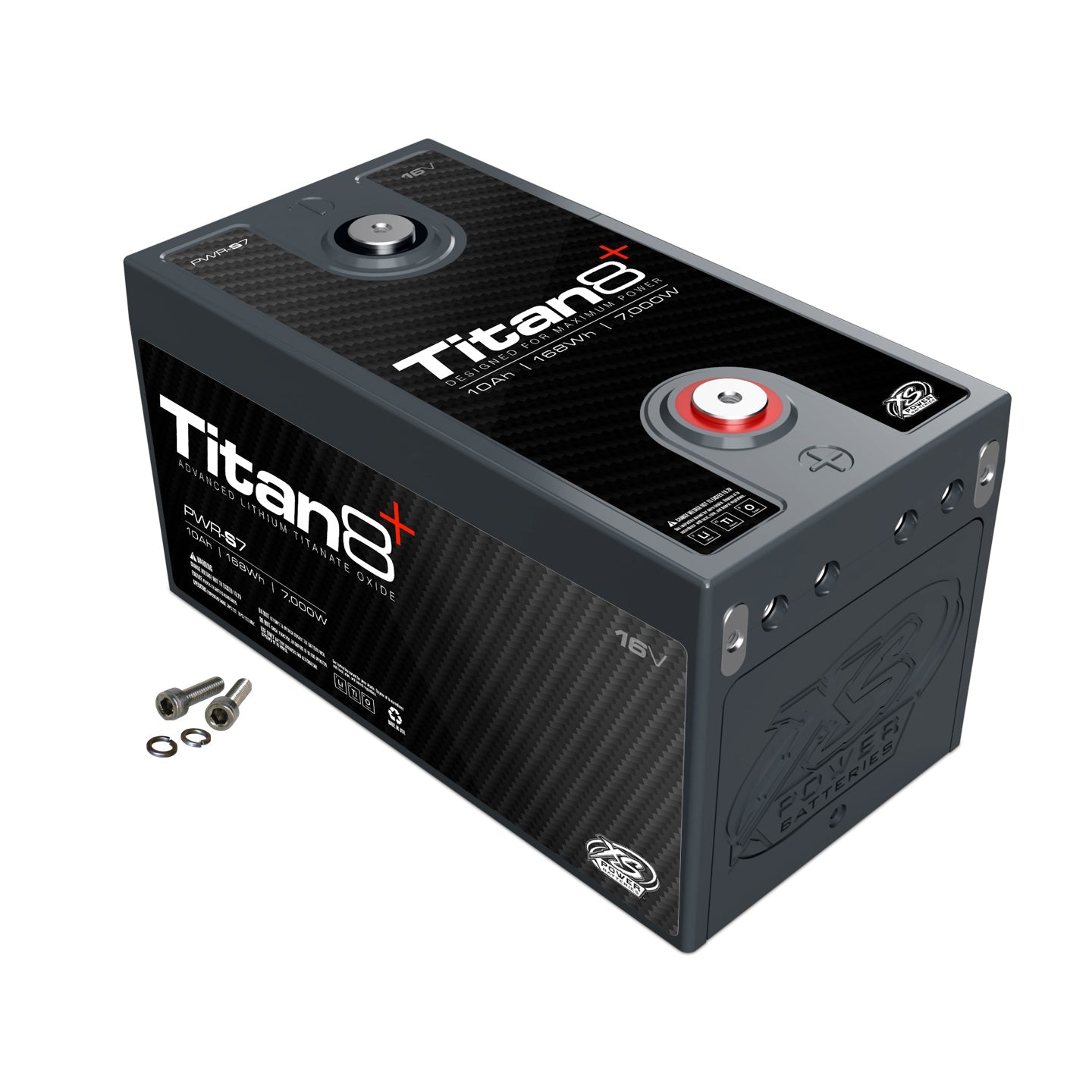
What it tells you: Which electrical system the battery belongs in. A 12V battery is built from six lead-acid cells in series. A 16V battery adds cells for racing and high-output audio applications where a higher system voltage means more power from the same amplifier.

The nuance most people miss: "12V" is a label, not a reading. A healthy, fully charged 12V AGM rests meaningfully above 12.0 volts, and it will read higher still with the engine running and the alternator charging. A battery that actually measures 12.0V at rest isn't at full charge — it's significantly discharged.

Why you care: Nominal voltage has to match your charging system and your amplifiers. Running a 16V battery on a stock 12V alternator, or vice versa, is not a mix-and-match decision.

Max Amps

What it is: The maximum instantaneous current the battery can deliver — a burst measurement, not a sustained one.

What it tells you: The battery's potential instantaneous current output under extremely low-resistance conditions. It is not a recommended operating current and should not be used to size or select a battery for a vehicle.

Why you care: A very high instantaneous-current capability generally tells you the battery has low internal resistance and can supply a large amount of current for a very short period with relatively little voltage sag. That can correlate with strong transient performance—things like starter inrush, large audio-system peaks, or other brief high-current events. But it does not tell you how much current the battery can safely sustain, how long it can support a load, or whether it is the correct battery for a particular vehicle.

Where the number becomes especially important is in electrical-system protection. If a battery is capable of several thousand amps into a fault, engineers and installers need to know that when specifying things like fuses, circuit breakers, disconnects, contactors, busbars, cable protection, and other components. Those devices need adequate interrupting capability to safely clear a fault produced by the battery

Don't confuse it with: CCA. Max amps is an unloaded burst figure. CCA is a standardized, temperature-controlled endurance test. They measure different things.

CA (Cranking Amps)

What it is: A standardized SAE test measuring how many amps the battery can deliver for 30 seconds at 32°F (0°C) while holding terminal voltage above a defined minimum.

What it tells you: Sustained starting power in moderate temperatures. You'll also see this rated as MCA (Marine Cranking Amps) — same test, marine label.

Why you care: It's a real-world starting figure for anyone who isn't parking in a Michigan winter. It's tested at a warmer temperature than CCA, so the CA number on any given battery will always be the higher of the two.

CCA (Cold Cranking Amps)

What it is: The same 30-second test as CA, but run at 0°F (-18°C).

What it tells you: Starting power under the worst realistic conditions. Cold thickens engine oil and slows the chemical reaction inside the battery at the same time — the engine gets harder to turn over exactly when the battery is least able to turn it. CCA is the industry's standard worst-case benchmark.

Why you care: CCA is the most widely quoted spec in the battery industry and the easiest to compare across brands, because everyone tests it the same way. It's the number to check against your vehicle manufacturer's minimum requirement. Just remember it's a starting spec — a high CCA tells you the battery cranks well, not that it will hold up under a sustained amplifier load.

Rule of thumb: CCA will always be lower than CA on the same battery. If a competitor's numbers say otherwise, check which test they're actually quoting.

Ah (Amp Hours)

What it is: Total energy storage capacity — the size of the tank.

What it tells you: How much current the battery can deliver over time. The math is straightforward: capacity in amp hours divided by your current draw in amps gives you roughly how many hours you get.

The catch: That relationship isn't perfectly linear. Pull current much faster than the rated discharge rate and you'll get less total energy out than the number suggests — a real effect called Peukert's law. AGMs handle high-rate discharge far better than flooded batteries, but the principle still applies.

Why you care: Amp hours matter most when the engine is off. Playing music at a show, running a competition burp, camping, powering accessories at a tailgate — that's all coming out of the Ah figure. Two batteries can have nearly identical CCA and wildly different Ah, and they will behave completely differently the moment the alternator stops spinning.

RC (Reserve Capacity)

What it is: The number of minutes the battery can supply a steady 25-amp load at 80°F before falling below a defined cutoff voltage.

What it tells you: How long the battery can carry the vehicle's electrical load on its own. The test was originally designed to simulate an alternator failure — how far can you drive on battery alone?

Why you care: Reserve capacity is amp hours translated into something intuitive. It's a sustained-load endurance rating, so it's the closest single spec to "how long will this thing actually run my system with the engine off." Higher RC means more runtime and, generally, a battery that's less stressed during normal deep-cycle use — which usually means it lasts longer.

Note the units: RC is in minutes, Ah is in amp hours. They describe related things but they are not interchangeable numbers.

Primary Watts

What it is: XS Power's rating for how much amplifier power the battery supports when it's serving as the primary battery — the main under-hood battery, doing the starting duty and running the vehicle's electrical system in addition to your audio.

What it tells you: The realistic system wattage this battery can back up when it's carrying everything. Because it's handling engine cranking, factory electronics, and your amplifiers, the primary rating is the more conservative of the two wattage figures.

Why you care: If you're replacing your factory battery with an XS Power AGM and that's the only battery in the vehicle, this is your number.

Worth knowing: Some batteries in the lineup list Primary Watts as N/A. That's intentional — those are designed purely as add-on power cells and aren't intended to serve as a vehicle's starting battery.

Secondary Watts

What it is: The rating for the same battery installed as an additional battery — added to a system that already has a primary battery and a functioning charging system.

What it tells you: The additional amplifier power this battery can support in a supporting role. This number is always higher than the primary rating, for a simple reason: in the secondary position, the battery isn't responsible for starting the engine or carrying the vehicle's baseline load. All of its capability goes toward buffering the audio system.

Why you care: This is the spec for anyone adding a rear battery to an existing build. The two ratings aren't in conflict — they're the same battery evaluated in two different jobs.

Important caveat: Adding batteries does not create energy. Batteries buffer and store; the alternator generates. If you're adding significant wattage, upgrading the charging system and the wiring between the batteries needs to be part of the plan.

Polarity

What it is: Which side the positive (+) terminal sits on when you're looking at the battery from the front, with the terminals facing you. L means the positive post is on the left. R means it's on the right.

What it tells you: Whether your existing cables will reach the right posts. That's it — but it's not a small thing.

Why you care: Battery cables are cut to length. A battery with reversed polarity may drop perfectly into the tray and still put the positive post several inches from where your positive cable ends. Best case, you're buying and running new cable. Worst case, someone forces a connection and reverses polarity on the vehicle — which can destroy an alternator, an ECU, or an amplifier in seconds.

How to check: Look at the battery you're pulling out before you order. Note which side the red cable connects to with the battery sitting in its normal installed orientation. On our lineup, reverse-polarity versions of a given model are identified by an R in the part number.

How the specs work together

No single number tells you whether a battery is right for your build. They break into three groups:

Fitment specs

check these first. BCI Group Size, Polarity, and Volts. These are pass/fail. Either the battery fits your vehicle and your electrical system or it doesn't, and no amount of power on the spec sheet fixes a battery that won't bolt in.

Power specs

how hard it hits. Max Amps, CA, and CCA. These describe short, heavy current delivery: cranking the engine, or catching a bass transient without letting system voltage sag.

Capacity specs

how long it lasts. Ah and RC. These describe sustained delivery over time, and they're what matter when the engine is off.

Primary and Secondary Watts are XS Power's shortcut across all of the above — our own translation of the raw electrical specs into the language you're actually shopping in. If you know your total system wattage and where the battery is going in the vehicle, those two numbers get you to the right product fast.

Start with fitment. Then decide whether your build is limited by peak demand or by runtime — most car audio builds need both, but competition and daily-driver systems weight them very differently. Match the wattage rating to your amplifiers and the battery's role in the system, and you'll land in the right place.

Still not sure which battery you need?

Use our Battery Finder to match a battery to your vehicle by year, make, and model, or browse the full AGM lineup by group size and wattage rating. Every XS Power AGM is tested in our own lab before a label goes on it — when we print a number, you can build around it.